
As the director, manager, or owner of a non-profit in Hawaiʻi, you are likely aware that your business relies on grants and donations. This means that maintaining a good public and financial reputation is important for your long-term success. Any incidents that can shake your donors’ confidence or your operation’s integrity, such as vandalism or theft, need to be considered in the overall risk management plan for the business.
Covered in This Article:
This guide will help non-profit organization (NPO) directors and operations leaders assess their risk for vandalism and theft, both inside and outside their business. It also outlines practical crime prevention strategies and response best practices to help nonprofits reduce risk, protect property, and respond quickly if an incident occurs. Look for:
- Internal vs. external security vulnerabilities
- Common vandalism and theft risks facing nonprofit organizations
- Preventive measures to reduce crime risk
- How nonprofits should respond after an incident
What Is Property Damage and How Does It Affect Non-Profits?
Despite advances in modern prevention measures, crime-related property damage is continuing to increase. According to a 2023 security survey, around 28% of businesses reported more physical security incidents compared to the previous year, half of which involved theft. Additionally, according to the U.S. Department of Justice, businesses in the United States collectively lose between $2 billion and $10 billion from vandalism every year.
These security incidents are financially costly, but they also impact the operations of the business. According to the same survey, 40% of business owners said that security incidents caused project delays, while 25% reported cash flow issues. As many as half of these businesses plan to install more security cameras to respond to these issues, but with security events continuing to increase, businesses need other safeguards to protect themselves.
Note: Since businesses often underreport vandalism and theft to protect their reputations, the real incident rates are likely higher than reported. This underreporting is likely highest among non-profits, which stand to lose the most from negative media representation due to their reliance on donor confidence to achieve their goals.
Common Types of Criminal Property Damage Affecting Non-Profits
To create a response plan, start by identifying each of the three types of criminal property damage and how they can impact the business:
Theft, including stolen property or material assets
Impact: Since non-profits operate mostly on grants and donations, they have less liquid capital to respond to crimes. This makes reclaiming, repairing, or replacing assets more difficult, which can put a strain on operations.
Vandalism, including defacing property or public equipment, signage, vehicles, and any other physical asset
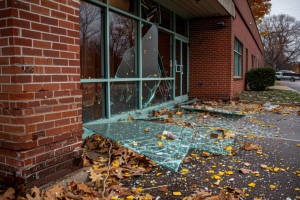
Impact: For non-profits, vandalism of property or assets could mean shutting down an important office, changing operational hours, or canceling a hosted event, which could impact financial stability or donor confidence.
Fraud, which could include internal financial mismanagement or external attacks
Impact: Due to having comparatively lower capital, non-profits that are victims of fraud lose half as much per-incident on average than for-profit businesses. However, they are also fined by regulatory organizations 25%-56% more frequently as a result of fraud due to the sensitive nature of their business.
How Non-Profit Businesses Can Protect Themselves From Crime
Non-profits often feel powerless to handle losses after being defrauded, vandalized, or stolen from. The following steps outline how a nonprofit can protect its assets, finances, and insurance policies against potential criminal activity.
Step #1: Establish and Enforce Internal Controls
Safeguarding commercial property from criminal damages begins with strong internal controls, which provide a system of accountability. When cash flows in or out of the business, a receipt should be created and deposited as soon as possible, and the monthly bank account should always be checked by someone who did not handle the money to lower the risk of fraud.
Insurance Step: Directors & Officers insurance helps prevent costly property theft by covering losses from financial mismanagement. Professional Liability insurance covers court costs, attorney fees, and other expenses if the organization faces fraud.
Step #2: Add Security Measures to Physical Property
Even without extensive physical assets like for-profit businesses, nonprofits remain vulnerable to theft and vandalism. Such incidents can disrupt operations, cancel events, and erode stakeholder confidence.
Installing security measures such as cameras, alarms, and equipment-tracking sensors, helps protect assets and reassures donors. Strong security can also lower insurance risks, potentially reducing policy premiums.
Insurance Step: General Liability protects against bodily or personal injury claims, while Commercial Property covers costs from damaged or stolen assets. Commercial Auto reimburses damage to company vehicles and can extend coverage to employee or volunteer vehicles used for organizational purposes.
Step #3: Create a Clear Crisis Management Plan
Clear crisis management plans begin with communication. Directors and stakeholders should be available to discuss suspicious activity when employees report it. Additionally, a system should be in place to blow the whistle on compliance issues, swiftly report suspicious activity on company premises, and initiate the insurance report to mitigate the damage.
Insurance Step: Crime Insurance and Liability Insurance plans can supplement General Liability to help non-profit organizations extend their coverage net to include protections for unexpected criminal damages.
Step #4: Work With a Local Insurance Provider

While several insurance policies can lower the cost of criminal damages to the business, the insurance needs of each non-profit are different. A trusted local insurance provider can help create a plan with the right types of coverage, deductibles, and liability limits to meet their goals for financial performance and transparency.
Insurance Step: Umbrella Insurance policies can provide additional coverage when the liability limits of other policies are not enough to cover a large claim.
Atlas Insurance Protects Non-Profits From Criminal Damages
At Atlas Insurance, our team is local and has served countless non-profit businesses over the last 96 years with a range of services. These have included personalized risk management, property and casualty claims, claims management, and more. Our goal is to help non-profits prevent and respond to property crimes with insurance plans personalized to their employees, locations, and financial goals.
Contact our experienced team today to learn how to plan and update your insurance policies to safeguard your non-profit against theft, vandalism, fraud, and more.