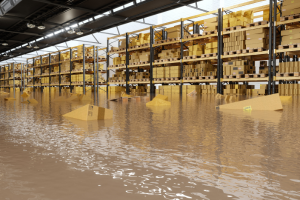
Your business is vulnerable in a variety of ways, from theft to difficulties in finding enough workers to do the necessary jobs. However, one potential problem that many business owners often forget about is the potential for flooding. If your business floods, you could be on the hook not only for repairs to your building, but for damaged products and slowed or even stalled sales.
In order to understand whether you need flood insurance, you should first learn more about what it does—and how most people who think they already have it, actually don’t.
What Constitutes A “Flood”?
The National Flood Insurance Program defines a flood as “a general and temporary condition of partial or complete inundation of two or more acres of normally dry land area or of two or more properties (at least one of which is your property).” From broken dams to storm surges, your property could be vulnerable to a flood even if you are not in an area prone to severe weather such as hurricanes.
Can I Get Flood Insurance With My Property Insurance?
Contrary to popular belief, your property insurance likely does not include any protections for flooding. Many business owners are taken by surprise when their property floods and their property insurance—which they relied upon to help cover repairs—does not consider any type of flooding to be within the parameters of the policy. If you need flood insurance, you will almost assuredly have to purchase a separate policy. The good news is the National Flood Insurance Program makes it widely available. Plus, Atlas Insurance Agency, A Marsh & McLennan Agency LLC has access to a great number of private insurers that can also be competitive.
What Do Our Flood Insurance Policies Cover?
Flood insurance most commonly covers direct damage to your building as a result of flood waters. Whether it is your electrical system that is damaged or your floors and walls need repairs, this typically falls under the purview of a flood policy. Commercial flood insurance also typically includes at least some coverage for the contents of your building; how much is right for you will depend upon the type of business you run and the products you store. In some cases, the Flood insurance can also be tailored to cover the resulting business income loss while your business is closed due to repairs.
When To Buy Commercial Flood Insurance
The best time to buy commercial flood insurance is as soon as possible. The National Flood Insurance program has a waiting period of at least 30 days, which means that it will be too late to purchase a flood policy if you notice that a potentially severe storm may be heading your way. Consider bundling flood insurance with your property insurance with the same provider to make the process more convenient.
Get Your Insurance From The Professionals At Atlas
When it comes to securing the right insurance for your business, commercial flood insurance is an important risk that is often overlooked. At Atlas Insurance, we stand behind the robust products that we offer and are happy to help you select that policy that will safeguard your business best. Call us at (808) 400-6680 or request a quote online to learn more.
Frequently Asked Questions About Commercial Flood Insurance
Most Hawaiʻi businesses benefit from commercial flood insurance, even those that are not located in a designated high-risk flood zone. Heavy rain, stream overflow, storm surge, tsunami runup, and infrastructure failures can cause flooding well outside FEMA flood zones, and standard commercial property policies exclude flood damage entirely. Businesses located in Special Flood Hazard Areas (SFHAs) are usually required to carry flood insurance as a condition of mortgages or commercial loans. Atlas reviews your property location, elevation, and exposure to determine the right level of coverage.
The National Flood Insurance Program offers commercial flood insurance with maximum limits of $500,000 for the building and $500,000 for contents. Businesses with property values exceeding these limits often pair NFIP coverage with private flood insurance, which offers higher limits and can extend to business income loss, expanded contents coverage, and basement improvements. Atlas works with both NFIP and private flood markets to build coverage that matches your actual property values.
Yes. NFIP policies have a standard 30-day waiting period before coverage takes effect, which means you cannot purchase flood insurance once a storm is approaching and expect immediate protection. There are limited exceptions, including policies purchased in connection with a new mortgage and some private flood policies that may have shorter waiting periods. The takeaway for Hawaiʻi business owners is simple, do not wait until hurricane season or a storm forecast to put coverage in place.
Flood insurance covers damage caused by rising water from any source, including heavy rain, storm surge, stream overflow, and infrastructure failure. Hurricane insurance specifically covers wind damage caused by named tropical storms and hurricanes. The two perils often occur during the same event but require separate policies in Hawaiʻi because standard commercial property excludes both hurricane wind and flood. Most Hawaiʻi businesses need commercial property, hurricane, and flood coverage working together to fully protect against storm-related losses.
It depends on the policy. Standard NFIP commercial flood policies cover direct physical damage to the building and contents but do not include business income loss. Private flood insurance policies often offer business income coverage as an option or built-in feature, replacing lost revenue and continuing expenses while your business is closed for flood-related repairs. For Hawaiʻi businesses where rebuilding can take months because of shipping and permitting timelines, business income coverage is often as important as the property coverage itself.

Does Your Hawaiʻi Nonprofit Need Property Insurance?
Find out whether your Hawaiʻi nonprofit needs property insurance, what it covers, and how island-specific risks like hurricanes and flooding affect your coverage decisions.

What Hawai‘i Nonprofits Need to Know About Insurance Compliance Requirements
Hawaiʻi nonprofits face unique insurance compliance rules. Learn the coverage requirements your organization needs to stay protected and compliant.
How Risk Assessments Can Lower Your Nonprofit’s Insurance Premiums
Discover how regular risk assessments can lower your nonprofit’s insurance premiums. Learn to identify hazards and implement safety protocols today. Read more.