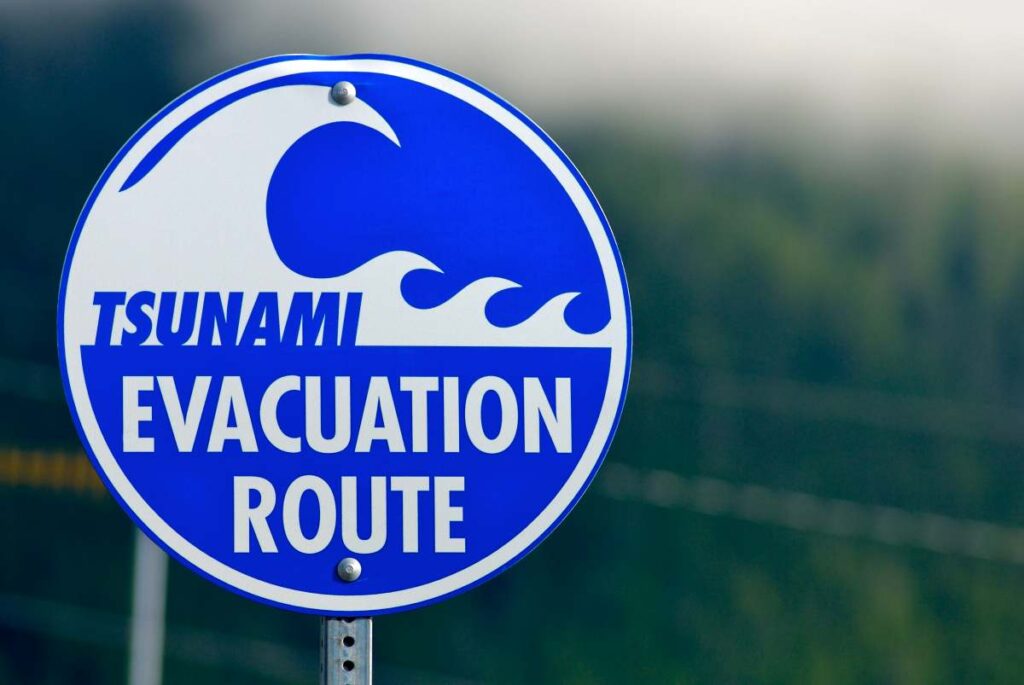
Tsunamis are a serious hazard in Hawaiʻi, and official warnings for the state come from the Pacific Tsunami Warning Center in Honolulu. Hawaiʻi Emergency Management Agency (HI-EMA) explains that the state has mapped tsunami inundation zones and extreme tsunami inundation zones, and each county is responsible for evacuation orders and the all-clear during an event.
Why It Matters in Hawaiʻi
Tsunami risk matters in Hawaiʻi because so many homes, condo communities, visitor areas, businesses, roads, harbors, and public spaces are located near the shoreline. Hawaiʻi is also uniquely dependent on ports, roads, and coastal infrastructure, which means a tsunami can affect not only immediate safety, but also access, supply chains, tourism activity, and business continuity across an island community. HI-EMA’s current preparedness guidance also stresses Hawaiʻi’s isolation and the need to be ready for disruptions to shipping and supplies after a major event.
Immediate Safety Guidance
For individuals, the priority is to:
- Move quickly and don’t wait for conditions to worsen. Ready.gov says to evacuate immediately if you are under a tsunami warning or notice natural warning signs, and HI-EMA says anyone in a tsunami evacuation zone should leave for higher ground if a warning is issued.
- If a local earthquake makes it difficult to stand, or if you are near the shoreline and feel strong shaking, HI-EMA says to move to higher ground right away.
For businesses, immediate safety means:
Protecting employees, customers, tenants, and visitors first. That includes knowing whether your site is in an evacuation zone, understanding who makes closure or evacuation decisions, having a way to communicate quickly, and planning how to account for staff and visitors during an emergency. Ready.gov’s planning tools emphasize evacuation routes, emergency kits, and communication plans, which are especially important for businesses in coastal or visitor-heavy areas.
Common Risks & Impacts
For Individuals
For households, tsunami impacts can include injury risk, sudden evacuation, property damage, vehicle loss, displacement, contaminated belongings, and blocked access to homes or neighborhoods. Even people outside the most heavily affected area may still face road closures, utility disruption, canceled school or work schedules, and difficulty getting basic supplies if coastal infrastructure is affected.
For Businesses
For businesses, a tsunami can interrupt operations even if the building itself is not destroyed. Waterfront and low-lying businesses may face direct damage, while others may be affected by evacuation orders, employee displacement, road closures, reduced tourism activity, damaged harbors, delayed shipments, or utility outages. In Hawaiʻi, where many local businesses depend on customer access, coastal activity, and supply deliveries, those ripple effects can be significant.
What Most People Don’t Realize
One thing many people do not realize is that a tsunami is not just one dramatic wave. National Oceanic and Atmospheric Administration (NOAA) and Ready.gov both emphasize that tsunamis can arrive as a series of dangerous waves and that later waves may be larger than the first. That means people should not return to the coast until officials say it is safe.
Another blind spot is that tsunami planning in Hawaiʻi is highly location-specific. HI-EMA provides county-by-county evacuation maps because whether someone needs to leave depends heavily on where they live, work, or operate. For some people, preparation may mean knowing the route to higher ground. For others, it may mean understanding whether vertical evacuation is the safer option if they cannot leave the zone quickly enough.
How to Prepare
Before the Event
- Preparation starts with knowing whether your home, condo, workplace, or business is in a tsunami evacuation zone. HI-EMA provides downloadable and interactive evacuation maps by county
- HI-EMA and Ready.gov recommend creating a family or business emergency plan, identifying evacuation routes, preparing supplies, and thinking through communication needs before an event happens
- HI-EMA’s current guidance for Hawaiʻi residents also recommends being two weeks ready because major disasters can disrupt ports and supply chains.For homes and condo residents, that may mean planning for pets, medications, important documents, and how to reconnect with family members after evacuation.
- For businesses, that may mean preparing employee communications, shutdown procedures, tenant notices, alternate work arrangements, and documentation practices so decisions can be made quickly when warnings are issued.
After the Event
After a tsunami event, safety still comes first. Do not return to evacuated areas until county and state officials issue the all-clear. NOAA and Ready.gov both warn that dangerous water movement can continue after the first wave and that returning too early can put people at serious risk. Once reentry is permitted, residents and businesses should document damage, check for structural and utility hazards, and proceed carefully during cleanup and recovery.
Insurance & Risk Considerations
Tsunami recovery can create complicated questions because it may involve water damage, debris, business interruption, evacuation-related disruption, and losses tied to coastal infrastructure. For residents, condo communities, and businesses, it is important to understand in advance how shoreline-related flooding, water intrusion, property damage, and interruption of operations would be handled. The practical lesson is the same as with other coastal hazards: planning ahead matters more than trying to sort through coverage questions after a warning is issued.
For Hawaiʻi specifically, location is everything. Evacuation zones, coastal exposure, building type, and dependency on access routes all shape how severely a tsunami may affect a person, property, or business. That is why reviewing risk, continuity planning, and documentation before an event can help households and organizations recover more smoothly afterward.
How Atlas Can Help
Atlas Insurance Agency, A Marsh Agency LLC Company can help Hawaiʻi residents, condominium communities, and businesses think through tsunami-related risk before an event happens — and navigate recovery questions afterward. That may include helping clients review location-based exposures, continuity planning, documentation practices, and claims-related considerations tied to homes, AOAO communities, and business operations.
Our role is to help clients prepare earlier, respond more confidently, and recover more smoothly.
Atlas Insurance Agency, A Marsh Agency LLC Company is available for media interviews related to tsunami preparedness, coastal risk, insurance considerations, condo community exposure, and business continuity in Hawaiʻi.