When business owners prepare their benefits plans to improve employee retention, they focus on what their employees are looking for in a long-term position. With the cost of living and healthcare costs increasing every year, a well-communicated and customizable employee benefits package demonstrates that businesses are putting their workers first, including their long-term health and success.
The right benefits package can be an effective employee retention strategy, but only if businesses can follow the best practices for their industry and workforce. In 2026, as younger generations continue taking over the workforce, health and wellness expectations are changing. This article reviews those changes, as well as strategies that can help your team provide a benefits package that works as a more effective retention tool in today’s market.
Understanding Employee Benefits
Employee benefits planning usually refers to mandatory healthcare coverage, but employers have other factors to consider. Businesses in Hawaiʻi are required to provide workers’ compensation coverage in addition to healthcare. That means your policy needs to cover areas such as medical care, disability (total and partial), disfigurement, death benefits, and vocational rehabilitation.
This falls under what’s called a mandatory benefit, one that’s required by law at the federal, state, or local level. However, employers should also consider voluntary benefits, which are not mandatory but provide a clear benefit to job satisfaction and loyalty ratings when offered.
The Impact of Employee Benefits on Retention
According to recent benefits studies, almost 3 in 4 U.S. workers named their benefits package as equally or more important than their pay in determining their job satisfaction. In another study, 63% of workers reported that they would leave their organization if they received an offer with better benefits.
While these figures show a clear link between benefits and retention, physical health coverage isn’t the only type employees are looking for. Mental health benefits have risen in priority since the pandemic, and also factor into employees’ choices.
In addition to 94% of workers reporting stress in their workplace, 28% report stress at a level that causes burnout. This refers to when mental and physical stress factors cause employees to lose their ability to work, leading to less job satisfaction, higher turnover, and more absentee costs.
Key Takeaway: Focusing on mental health benefits when planning a benefits strategy can help employees feel valued, provide resources to prevent burnout, and increase loyalty.
Core Components of a Comprehensive Employee Benefits Package
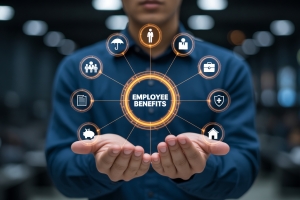
Health insurance is the strongest starting point for any strong benefits package, and in Hawaiʻi, it’s also the law. Workers’ compensation and commercial auto coverage round out the list of policies Hawaiʻi employers are required to carry.
But meeting legal minimums is just the starting point. Offering solid health coverage and meaningful medical benefits shows your team that their well-being is a priority, not just a compliance checkbox.
Employers using benefits packages as a competitive advantage tend to include:
- Retirement plans, which give employees long-term financial security
- Flexible work schedules, including remote work options
- Mental health resources, including remote help and work-life balance programs
- Physical health resources, including fitness help, smoking cessation, and diet programs
- Skill development, including education stipends, coaching, and feedback
Employers should be looking to provide their employees with benefits that both satisfy legal rules and match their care needs. A well-rounded benefits package predicts these needs while offering room for customized benefits, so employees can choose the plans that match their goals.
Customization and Personalization of Benefits
Customizing benefits can make them more attractive to specific groups of employees. It can also help employers prioritize their investments based on higher rates of return on employee satisfaction, productivity, and loyalty.
For example, smoking cessation, work model flexibility, and student debt assistance are three of the most frequently offered benefits for U.S. employers. However, while Hawaiʻi is ranked in the bottom ten in the U.S. for both tobacco use and remote work, it is number 7 in terms of the highest average student debt per borrower.
This means that student debt assistance, parental time off, and on-site fitness opportunities will likely be more attractive to employees in Hawaiʻi than remote benefits and smoking cessation programs. By considering local workforce trends alongside the needs of their own employees, employers can prioritize their investments based on the benefits with the greatest potential positive impact.
Case Study: A scientific analysis of social media data measured benefit types against company performance metrics to show that the type of benefit offered tended to result in different outcomes. The findings showed that high-profit organizations offered specialized benefits, high-growth organizations offered broader and more numerous benefits, and organizations reliant on specialized, skilled performers offered rare, high-demand benefits.
Best Practices for Designing Employee Benefits Packages
Designing employee benefits packages with maximum impact on retention, productivity, and satisfaction starts with meeting mandatory federal and state requirements. Then, feedback surveys can be used to learn which voluntary benefits employees value, as well as why they don’t use certain benefits already offered.
For example, employee loyalty programs can be effective at increasing retention, but only if employees engage with them. Achieving greater participation is difficult without knowing why employees aren’t using the program. Feedback surveys help employers tell the difference between loyalty programs that need to be improved and those that simply need to be communicated better.
Challenges in Implementing Comprehensive Benefits

Even with well-documented benefits, presenting a strong employee benefits package can lead to challenges. Budget constraints, hesitation among management, low participation from employees, and competition from other businesses can reduce the value of your investment.
Local benefits and insurance consultants can help benchmark benefits against industry standards and local competition to help you deliver the benefits that matter most to your employees.
Contact Local Advisors to Create Effective Employee Benefits Packages
At Atlas Insurance Agency, A Marsh Agency LLC Company, our team of local advisors works to customize benefits packages for businesses in Hawaiʻi. We draw on nearly 100 years of experience in insurance and employee benefits consulting to customize comprehensive benefits plans that also act as effective employee retention strategies.
Contact Atlas Insurance Agency, A Marsh Agency LLC Company and schedule a consultation to learn how our services can help you create a benefits plan based on what your employees value most.